October 13, 2026
How to spot a competitor's machine on a customer's lot from satellite
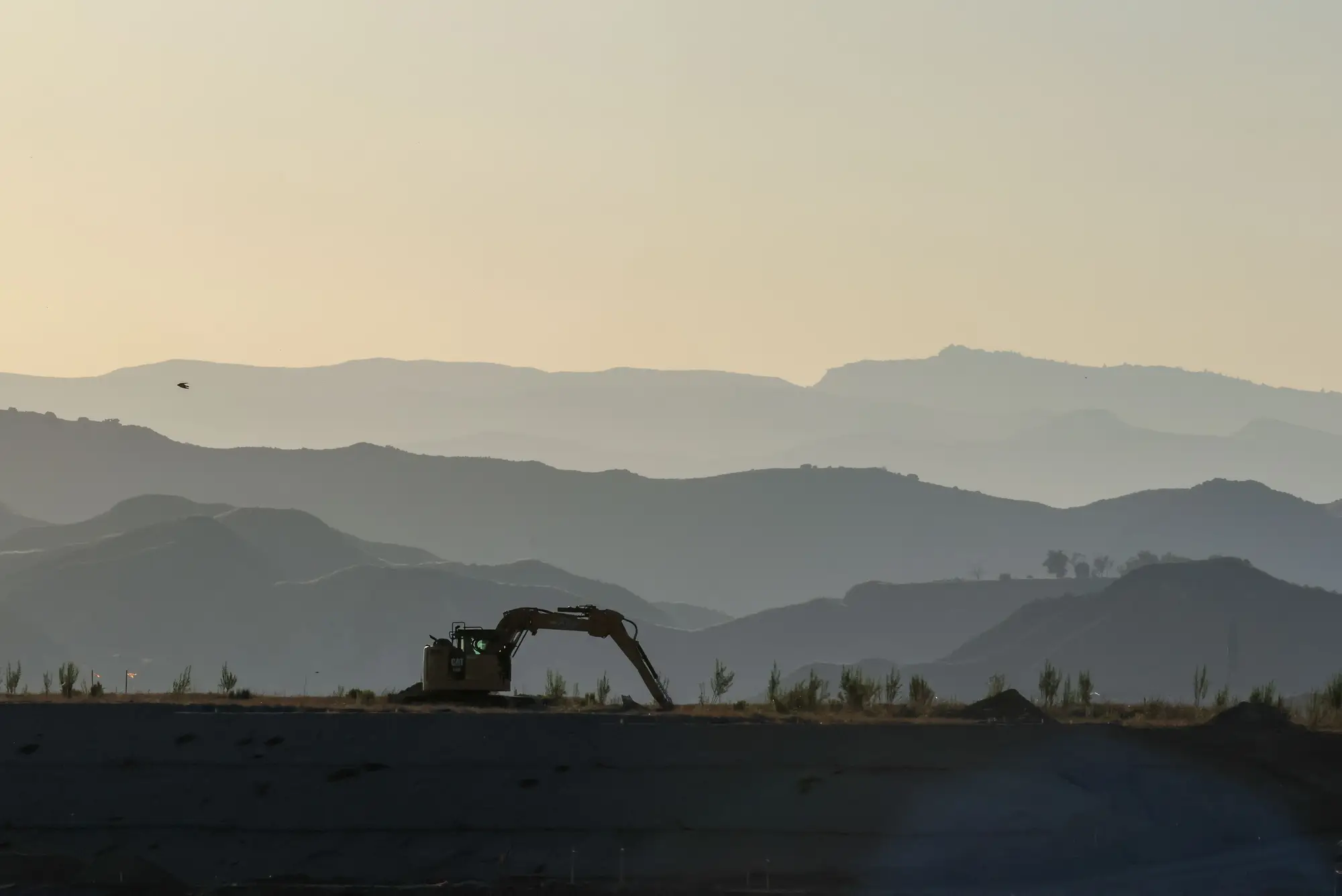
You already do this from the truck. You roll past a customer's yard on the way to a call three miles down the road, and your eyes go straight to the equipment line before you even clock the office trailer. A new paint scheme parked next to your iron registers before you've finished the thought. That instinct is real and it's earned, but it only fires when you happen to drive by, and most of your territory doesn't get a drive-by more than once a quarter.
Satellite imagery doesn't replace that eye. It gives it more windshield time than you've got hours in the week.
What actually reads as a competitor rig in an image
At sub-half-meter resolution you're not reading a decal. You're reading shape, shadow length, and placement. A wheel loader has a different silhouette than a dozer. A compact track loader sitting low and square next to a row of attachments looks nothing like a motor grader parked nose-out along a fence line. Once you've looked at a handful of images of machines you know, your brain starts pattern-matching the ones you don't.
Placement tells you more than the machine itself. A rig parked in the working area, with tracks or tire marks leading to it and wear in the gravel around it, has been running. A machine parked off to the side on grass, still clean-lined with no disturbance around it, might be a demo unit dropped off for a week. Both matter, but they mean different things for a call.
Color helps when the imagery is sharp enough and the sun angle cooperates. Most of the time you're not confirming a brand from paint. You're confirming that something new showed up that wasn't there last month, and that it's a different shape class than anything this customer already runs.
Reading it as a signal, not a guess
One competitor machine on a lot could be a rental. It could be a demo your rep counterpart talked them into for a job that starts Monday. It could be nothing, a neighbor's trailer parked on the wrong side of the property line for a week. The image alone doesn't tell you intent. What it gives you is a reason to make the call instead of waiting for the customer to mention it, or not.
What turns a single sighting into something worth working is the pattern around it. A new rig shows up the same month the customer's own machine that's due for trade has been sitting idle in the corner of the yard, untouched for three straight passes. A competitor unit parked next to a newly graded pad that wasn't there last quarter, like someone's clearing ground for an expansion. Those two things together, on the same yard, in the same window, are worth a call today, not whenever you happen to swing through next.
This is the part a windshield survey can't give you, because nobody remembers what a yard looked like two months ago well enough to spot the change. A rep covering forty or sixty accounts is working from memory and a gut feeling about who's "due." Memory doesn't catch the rig that showed up in week two and the idle machine that's been sitting since week one. A monthly pass over the same yard does, because it's the same eye looking at the same ground every time, not a different drive-by with different lighting and a different mood.
The other thing worth saying plainly: timing is most of the value here. A competitor machine spotted the week after it arrives is a live conversation. The same sighting three months later, after the customer's already signed, is just a story about a deal you lost.
If you'd rather get a ranked list of exactly this kind of change on your own territory each month, with the site location attached, that's the whole job Fleet Sales Leads is built to do. Take a look at how the monthly lead sheet works and see if it fits the way you cover ground.